Loyalty is often touted as a positive emotion, something to be admired and rewarded for. Yet loyalty has been the cause of suffering throughout known history and probably long before as well.
Loyalty pressures the individual into sacrifice and suffering ‘for the greater good’. Loyalty motivates groups into discrimination, exclusionism and violence towards ‘others’. It can even lead entire nations into waging wars and committing acts of mass murder and genocide, driven by the conviction that this is the loyal thing to do.
I have always wondered why loyalty was so often expected of me in contexts I didn’t sign up for. I didn’t choose to be born where I was born. I didn’t choose to belong to the religion of my parents, grandparents, and beyond. I didn’t vote for the crazy leaders ruining the countries I have lived in. Yes, more often than not, I was told I owed some sacred duty of loyalty to my family, tribe, religion, country and leaders, to the point of being expected to commit acts of violence against others and even happily give up my life in service of those nebulous but apparently deeply sacred construct I supposedly belonged to.
It seems to me that loyalty to any particular group is always a dangerous proposition, as it automatically and unavoidably means excluding other human beings from my duty of care. Loyalty to ‘us’ always means turning away from ‘them’; the others that are a threat to us, want the good things we have, and would rob, enslave or kill us is we gave them even half a chance. Any care, empathy or concern I might feel for those others, I am constantly told, means disloyalty to those I should think of as mine. As if my capacity for loving kindness is too limited to be wasted on outsiders.
I have always deeply mistrusted loyalty as a motivator, especially as a motivator for exclusion, distrust, violence and hate. Of course, I feel a special fondness and connectedness towards those who are close to me. Of course, I feel gratitude and even a sense of indebtedness to my ancestors who worked so hard and often suffered in order for me to live the beautiful life I am living. I have no problem with being asked to do something in return; to make positive contributions to my family, tribe and nation. But my loving-kindness, my capacity for helping others, my compassion for any life that is suffering is not limited to my in-group only. I see no reason to exclude any living being from my duty of care or compassion. All life is one, as far as I can see, and therefore has an equal claim to my loyalty and love.
No living being of any kind deserves to be excluded, neglected, humiliated, enslaved or killed just for being not us.
Waiting in an airport lounge I couldn’t escape seeing the news that was broadcasted on TV’s on every wall. And I can’t say that what I saw made me very happy.
The world is full of conflict. North fights South, East fights West, Left fights Right, Children fight Parents, Parents fight each other. Neighbours become bitter enemies; former friends fierce foes. Every slight becomes an issue, every issue a reason for battle.
What pains me to see is that most of those hard-fought conflicts are about imaginary differences and perceived divides. We have a million ways to see another human being as an other instead of an us. Their beards are funny, their eyes too dark, their hair too light, they speak the wrong language, sing the wrong songs, believe the wrong stories. Once categorised, they become less than human. They are different, therefore they are wrong. And because they are wrong they must be fought and punished for their wrongness.
Why is it so hard to see us for who we really are? If you set aside the minuscule variations we rank and divide people by, we are much more similar than we are different. We are all very close relatives with DNA that is practically identical all across the globe.
It may be true that we speak an amazing number of different languages but linguistically speaking the similarities between all human languages are much greater than what sets them apart. Any human child can learn any human language in existence, if exposed to it early enough.
The religions we fight so many bloody battles over all have common themes and images, symbols and stories, similar concept of good and evil, right and wrong. I believe that an alien visitor observing humanity would scarcely be able to keep them apart.
Please, people, for the love of humanity, try to keep in mind we are all the same in spite of those superficial differences we get so hung up about. We are all human, all beautiful and flawed, all magnificent and insignificant at the same time. There are no good guys or bad guys, just people doing things we judge as better or worse. Remember that plenty of good things were done for questionable reasons, and terrible things for the most glorious ideals.
Remember, always, that our shared humanity is what matters more than our perceived otherness. When we have to fight, let’s fight together rather than each other. Let’s unite to fight for justice, equality, peace and happiness. And when we fight such battles make them about the systems, ideologies and dogmas that ruin those ideals, not against the people driven by ideas that threaten what we hold dear. Those people are us, seen from the other side. Let’s not hate them for the flaws we ourselves are just as prone to.
I often wonder about humanity’s tendency to choose and follow petulant kings and childish tyrants; not just allowing them to rise to power, but enabling them to commit abhorrent crimes against humanity and destroying whole civilisations, not seldom including their own.
You would think that a tendency to choose bad rulers would, over time, be bred out of our genes. What evolutionary benefit can there be in this penchant for leaders that do more damage than good? Yet, we fall for the same types again and again.
Why? What mechanisms are at play here that not only let those types rise to power but help them grow their power to ridiculous heights, even when their childish and destructive behaviour is clearly visible to any discerning adult?
Since this pattern is so common across civilisations, I suspect it must be encoded deep in our DNA. I can only speculate – since we don’t really know how our DNA encodes our behaviours – that petulant kings and childish tyrants rely on the misapplication of otherwise healthy and necessary instincts.
Humans have deeply ingrained parental instincts, for example, that lead us to want to protect and care for helpless infants. Maybe infantile tyrants trigger that same instinct, in an exaggerated and dysfunctional way, like oversized and unnaturally brightly coloured eggs trigger a fanatical breeding impulse in birds. This could make us want to protect and even cherish an overtly childish and irresponsible leader.
Another pattern I suspect is our instinctual longing for the superhuman parent we lost when we grew up and saw our parents exposed for the frail and flawed human beings we never thought they were. There is something deeply comforting in the belief that our parents are all-knowing and all-powerful. It allows us to be the innocent child, powerless but safe under the protection of beings far superior to us.
Maybe we all still long to be that child, bowing in awe to the will of our superhuman parent. That could explain why we are drawn to individuals that openly and defiantly break laws, rules and social conventions. It would make irresponsible, boastful and arrogant leaders strangely attractive to the inner child we lost in early childhood. It would also explain why kings and tyrants through the ages have always been portrayed as larger-than-life, close to God or Gods, and possessed with magical and mystical powers.
David Graeber and Marshall Shalins in their book “On Kings” argue that we don’t want our kings and rulers to obey the law but to stand above it. A king that is constitutionally limited lacks that superhuman, even supernatural appeal that a ruler that answers to nothing and no-one seems to have. If I see what tyrants historically got away with, and often still do, it could be because of their followers’ need for someone who is truly above all human laws. That could be an echo of what the powerless child saw in its parents before they fell from grace.
The paradoxical combination those two instincts – the drive to protect and cherish our children, triggered by adults that behave like over-sized toddlers and the need for superhuman parent figures, triggered by ruthless individuals openly flaunting laws and conventions – can explain the fanatical devotion and protectiveness paired with unquestioning obedience you so often see destructive tyrants and misbehaving kings surrounded with.
If my suspicions are true, humanity is constantly at risk of being tricked by some of our deepest instincts into admiring, enabling and obeying deeply flawed, psychopathic and destructive individuals. Not because we consciously choose to do so, but because our instincts drive us to it.
So, what can we do about it? Are we doomed to fall for infantile bosses and ridiculous rulers forever?
I certainly hope not. I believe we are more than our instincts. I believe we can train our self-awareness and self-control to recognise and self-correct when our instincts trick us and are being used against us. I also believe we can shape our culture – the shared assumptions, behaviours and stories that our society lays on top of our instincts – to protect us from such abuse and trickery. It does mean we cannot let our culture be dictated by those who want to take advantage of such manipulation. We must, collective, choose to steel ourselves against the abuse of our vulnerable instincts, so we are less inclined to run blindly after rulers that lead us astray.
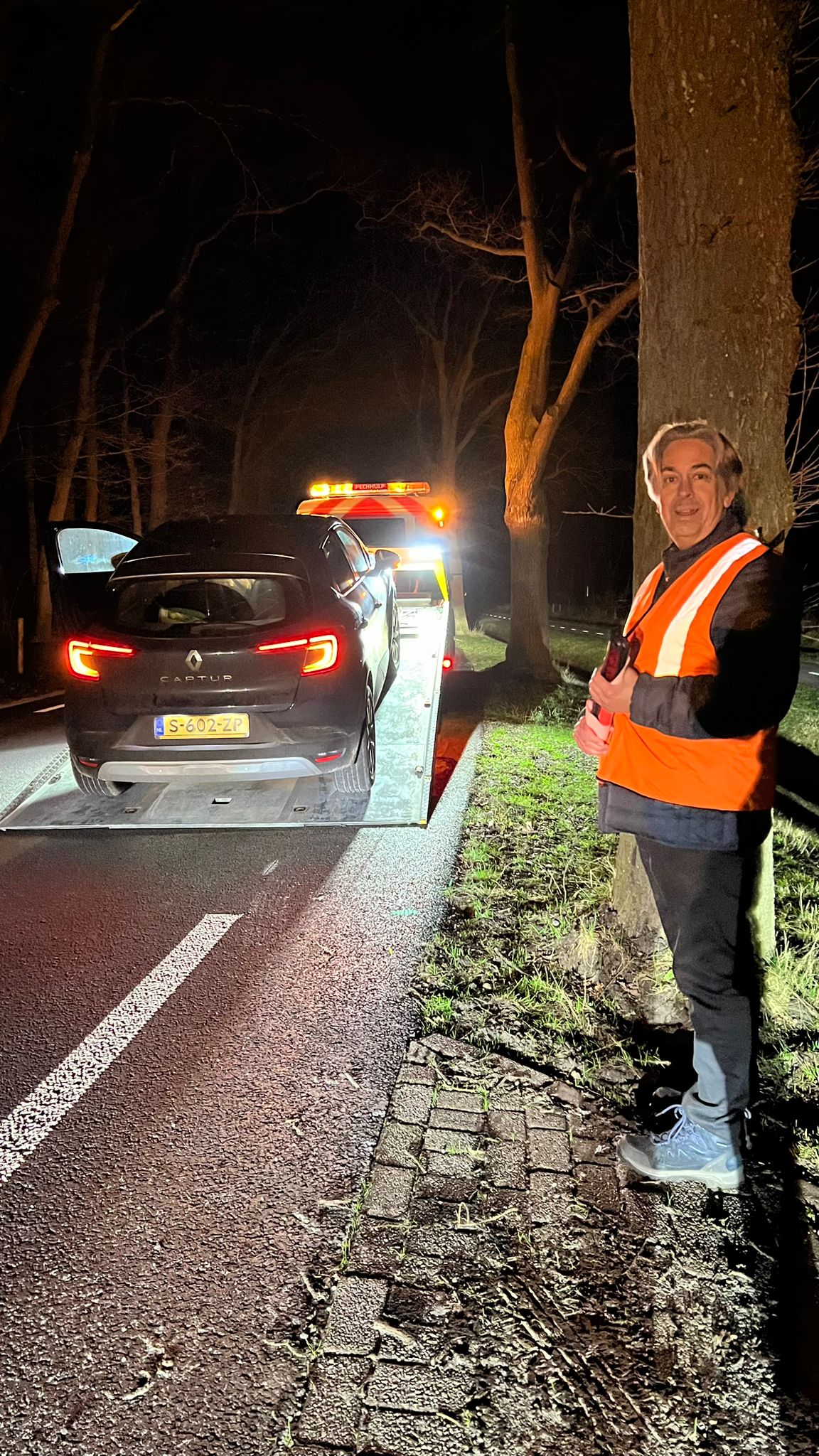
Some time ago I posted about the kind strangers and unkind systems I encountered when our car broke down rather dramatically in the middle of a fairly busy provincial road. Kind strangers got my wife and I safely home; unkind systems made it very hard for us to regain our mobility. For those wondering where this adventure has left us: today we have been able to pick up a rental car the dealer is lending us – with no costs attached – for the duration of the repairs. So, that part of the mishap has come to a satisfactory conclusion.
For me, however, that is not the end of this incident but rather the beginning of a learning journey. I am always trying to learn from the disruptions and upheavals in my life. Partially to find out what I can do differently in the future to prevent the same things from happening again. But also because retrospective learning is what gives such incidents a meaning beyond merely being annoying, painful or worse. It helps me put things in perspective.
So, talking to the mechanic who is working on my car today, the first thing I asked was if there was anything I could have done differently, either to prevent the car from malfunctioning or to get if safely off the road when it did. He assured me I had done nothing wrong. In fact, when he took the car for a test-drive after resetting the on-board computer and running some diagnostics, the car malfunctioned in exactly the same way, leaving him stranded in the middle of a roundabout. He had to be rescued by his colleagues from angrily honking cars driven by frantically gesticulating drivers. Clearly the car was at fault, not the driver.
So then question became: what exactly is causing the car to play up in this way? Why is it doing this? What part is at fault?
Interestingly enough, the mechanic explained that none of the parts were faulty as such – they all did what they needed to do, pretty much performing according to their design specifications. However, when put together, a few of the components, under very specific circumstance, managed to create a combined spike in electricity. That spike triggered the onboard computer’s safety system shutting everything down to prevent the electronics being fried. In other words: nominally correctly functioning parts could, without any of them actually malfunctioning, cause a sudden collapse of the whole system’s functionality; in fact bringing it to a dramatic mid-journey emergency stop.
To make a long story short (the mechanic and I talked for several hours, while waiting for the rental car to arrive): what was wrong with the car had less to do with its components than with the way they operated together. When more than a few parts came close to their edge-condition, the result could push the combined system over the edge.
So, what does that teach us?
First: none of the parts are to blame. They all did what was expected of them. So, no blame there. Second: the system as a whole had been designed with enough fail-saves to prevent major damage. So, no blame there either.
However, fail-safe isn’t the same as failing safely. I think there is a lot of room for improvement in the way the car stopped functioning. For instance, a manual override of the steering and brake system locks would at least allow the driver to push the car off the road once it had stopped. Perhaps the system could have degraded more gradually and gracefully, giving the driver more time to reach a safe place to stop the car. And I would argue that the warning signals on the dashboard could do with driver-centric redesign as well. Most of the warnings may have been useful for a mechanic trying to diagnose what was wrong but didn’t help me, driving the car as it was breaking down, understand what was going on and how best to respond to that. Just a small example: “inspect braking system” is not a useful instruction when you are going 80kms an hour and your car is suddenly and erratically applying the brakes.
Second: tolerances and redundancies can look wasteful on paper, but can make or break a system under stress. The mechanic and I suspect that some of the components had been under-dimensioned to save costs. While technically within specifications, they didn’t have the extra ‘wriggle room’ to handle various edge cases gracefully.
Finally: complex systems, especially when tightly integrated and full of dependencies become sources of unpredictable exceptions. Our car’s onboard computer is full of rule-based software telling it how to respond to all the predictable exceptions. But rules-based systems are helpless in the face of unpredictable edge-exceeding cases. It should be the designers’ responsibility to a) reduce dependencies between components; b) built in more tolerances and redundancies to improve the system’s ability to recover (or degrade) gracefull from faults that occur; and c) provide an interface that is driver-centric, not car-centric to assist the driver in safely getting the car out of harms’ way when its systems are failing.
I am not blaming the designers, the manufacturer or the mechanics for what happened. Blame doesn’t teach us anything useful. But I do hope somebody somewhere learns from this and applies those lessons to their own situation to get a better outcome than the one I got the other day.
I had planned to write a long-ish follow-up to a previous post about kind strangers, adding some examples of people going the extra mile to ensure my wife and I came home safely after our ordeal with our car’s sudden death.
Unfortunately, the days after the event were filled with the opposite experience: unkind systems practically designed to make our lives as difficult as possible.
I found myself caught between 5 or 6 different parties, all supposed to help us resolve the unfortunate situation we are currently in: at home in a rural area, far from public transport, without a car for a period of time that could last days or even weeks. The solution is seemingly simple enough: if we could get a replacement car for the duration of the repairs, there would be no real issue. But 6 parties, with at least a dozen systems to work through between them quickly turned this into a Kafka-esk labyrinth with nothing but dead-ends.
The lease company pointed out the car is still under warranty, so it’s the supplier’s responsibility to provide us with alternative transportation. The supplier referred us to the dealer who is carrying out the repairs. The dealer tried to help us but discovered his system doesn’t allow him to book a car for us, since I am not registered as the owner of the car – the lease company is. The lease company then tells me they can activate our insurance, and make a claim through them. But the insurer says their system cannot take action until an official damage claim has been put in. I would be happy to do so, but was told the repairing dealer was the only one who could do that – after having carried out the repairs. Only then could a replacement car be requested, except, of course, that wouldn’t be necessary any more, since by then the car would have been fixed and ready to be returned to us.
By the end of the day I have had conversations with the lease company, the supplier, the dealer, the tow truck company, the insurer, and a rental car company … every time getting stuck on similar systemic issues. It is evening here now, and so far, nothing definite has been decided. With so many unkind systems to throw obstacles on our path, it could be days before we have a solution.
I am sure it will sort itself out eventually. But what is striking is the difference between the kind strangers willing to bend the rules to assist us and get us safely home, and the unkind systems messing things up. I can only assume their unkindness is not deliberate. And I have no complaints about the operators I talked to, all trying to their very best to find a solution. But each system was designed to solve a small part of a much larger puzzle, with no real understanding of the total complexity. Built around assumptions, and rules based on those assumptions, that cover an even smaller part of the puzzle – the part in which everything goes according to plan. Which it seldom does.
It is a miracle the human race survived at all. With their limited intelligence, primitive mindset and total lack of technology, their survival under some of the most impossible circumstances most have been dumb luck. Any evidence of global trading from prehistoric times should be attributed to nothing more than the random stumbling about of simpletons. Their megalithic monuments are just a product of brute force and stubbornness. It’s a good thing we modern humans have evolved so far beyond our brutish, stupid beginnings and are so much smarter than our primitive ancestors.
Let’s imagine, just for a moment, that you were transported back in time, to the world our pre-historic ancestors lived in. Surely you, with your superior intellect and sophisticated technological knowledge would soon be able to lead those poor dimwits out of their Stone Age into an Age of Enlightenment.
Or would you?
How much of the technology you have come to rely on do you actually understand? Do you know how to make even the most basic of the tools that are part and parcel of our modern world?
And how resilient are you, really, without any of those tools readily at hand? Would you be able to find and prepare food straight from Nature? Would you be able to navigate dense forests, vast open steppes, and even medium-sized seas without your technological crutches? Do you know how to carve a megalith out of a sheer cliff face, let alone how to transport it for 100s of kilometers, and then place it upright in a way that will last for millennia?
Before you assume you would easily become the King of the Stone Age people, consider this: not only did they survive and often thrive in situations you would perish in within minutes of your arrival; they did so using mostly their own brains, cunning, muscle-power, and verbally transmitted lore. All of the daily challenges you need modern technology for — technology invented by others, made by others, and kept running by others — they would have to find solutions for themselves.
Who is the clever one now? You, who can Google anything you need to know, stay in touch with 100’s of friends you never actually meet, and program a microwave to cook the perfect frozen meal? Or the ‘primitive’ Stone Age human, who had to remember 1000s of lines of verbal tradition, could survive solely on what Nature provided, and still managed to traverse the globe, and leave monuments that will outlast almost anything modern humans have produced?
Business is a means to make money. Nothing more, nothing less
The structure is still there but the heart has long gone – @Bard 2016
Money is all that matters in the end. The sole purpose of a business is to make its owners rich. Everything else is just embellishment and sales speak, covering up primal greed in lofty words and false sentimentality. There is no room for altruism or empathy in this cold, hard economic reality of business.
This assumption of the ruthless, relentless drive for profit is the one constant argument used to push back at anyone suggesting we should strive for a more humane version of the current capitalist model of commerce. This model has won, we are told, and is the dominant – maybe the only remaining – working economic model in existence. You may not like it, but there is no alternative. Businesses exist to make profit, and even their most altruistic and humane actions can ultimately only be explained by that economic necessity.
Is that really all there is to it? Business is business and there is no room for sentimentality when it comes to the bottom line?
I find it hard to believe that a system that leaves no room whatsoever for human values, such as virtue, compassion, kindness, higher purpose, social responsibility, etc. can ultimately thrive for long in our human world.
Why?
Because businesses are not alien life forms or soulless machines, but a collaboration of human beings, like you and me. And I don’t believe human beings are purely driven by greed and a selfish lust for power. We are social creatures at our very core. Wherever there are people, there are social structures and social rules to encourage collaboration, protect the weak, help each other and balance the greater good against the individual’s needs and desires.
Some people would argue that the very existence of those structures and rules proves that without them we would all just be brutal predators, waiting for a chance to pounce on the weak and helpless for nothing but our personal satisfaction. We have societies, they would say, because without them we would be savages.
Yet, all over this planet and all through history, people have found ways to peacefully live together, to collaborate and support each other. We find evidence from before the dawn of history of injured or old individuals being cared for. We find ancient myths proclaiming the virtues of compassion, kindness and social responsibility. Ancient laws talk about justice and fairness and social responsibility as if that is the natural state of our being, and those who deviate from it are the harmful exception society needs to be protected from.
I think the simplest explanation for this very human tendency to form complex, regulated and collaborative societies is that we are at heart a complex, regulated and collaborative species. We are NOT ruthless individuals only limited in the harm we do to other by the force of law and the fear of retribution. We WANT to live in peace. We LOVE to help each other. We THRIVE on collaboration. The rules and structures are there because we know societies are fragile things and can easily be twisted and broken by the few individuals that ignore their social side in favour of their individual desires. Precisely because we value a just, fair and functioning society so much we keep building them. Since we are far from perfect, our attempts to create the perfect society are bound to be imperfect, too. But we keep trying. Because what we really want is to live in peace.
Which brings me back to business. Businesses are human organisations and the people that come together to form a business bring all their human characteristics with them. That means that next to their individual needs and fears and insecurities, they bring their very human social instincts. They bring their desire for collaboration, for contribution, for attention, appreciation, affection, and acceptance, for fairness, for meaning and purpose.
Yes, they want money, too. They need to earn at least a living wage and most of us would love to earn a comfortable income, enough to put a rest to our – also very human – worry of not having enough in the future. But that is hardly ever the sum total of what we are after. Once our basic needs are met, most of us want more from work than just an income. We want to feel part of our organisations. We want to be proud of the work we do. We want to feel proud of the organisations we work for. We want to feel we’re making a positive contribution to our work and to the world.
With all the evidence we have that human beings are more, much more, than purely self-centred egoists, isn’t it sad that our corporate methods are so focused on bringing everything down to the lowest and meanest common denominator? More than sad, even. I have a strong suspicion that because the accepted business narrative has become so devoid of social and human considerations, the people working for them also lose touch with that side of their own socio-emotional needs and desires. By leaving no room for human needs other than money, status and power – by denying even that such needs exist – our organisations push people into a state of almost pure survival mode, where everything becomes a win-lose transaction, and every relationship and collaboration only exists for its utilitarian function.
The sad thing is that our society seems to have fallen for this false narrative of human nature. Business has become the dominant force in shaping our culture and with that its portrayal of humans as ‘homo economicus’ – the individual always out to maximise personal gain – has become the standard we measure everything by.
So, does that mean business has won and this is what we have to learn to live with?
As I said, I don’t believe that this model and its way of thinking is ultimately sustainable. We all get pressured on a daily basis to believe in this model. We all are forced to obey its rules even if we don’t believe in it. Yet, humans will be humans, and when a part of us remains unfulfilled and unexpressed, this will, sooner or later, create a reaction. When we can’t express our social nature, we will get stressed, uncomfortable, dysfunctional and sick. When we can’t satisfy our need to be a good person, we feel unfulfilled and unhappy. We know there is something missing, even if we can’t exactly put our finger on it. Even if we belong to the lucky minority that succeeds in the material race for money, status and power, if we can’t express our essential social character, we will not be satisfied.
By ignoring the social nature of the people that make up their organisations, businesses are pushing them to a breaking point. In this time of change and uncertainty, just when businesses need their people to be at their best, their most creative and most daring, they are reducing their people to the most basic state of survival. This makes it harder, almost impossible, for people to live up to what is expected of them, which only increases their stress and fear of failure, making things even worse. Something will have to give. Something will give.
I think we are close to breaking-point right now. The very success of the current way of thinking is creating the conditions for its own downfall. By taking over all aspects of our lives, the cold, self-centred homo-economicus we are made to believe we are has driven the altruistic, caring homo-socialis1almost completely underground. But there, with its back to the wall, it will become stronger. Like all suppressed emotions, our social needs and desires have not disappeared, they are just gathering strength. They are collecting the tension, the sadness, the disappointment and the longing and turning it into energy, like tightening a spring. And when the right moment comes, the spring will be released. All that stored energy will come out with an unstoppable force when the breaking point is reached.
I don’t know how this is going to end. I am not a prophet. I am not even a futurist2. But I do know we are facing a fundamental choice here. When the breaking point comes, what are we going to break? Are we letting it break society and all the people in it, or will we break the business model causing all this pain and dysfunction?
The more I know about something the better I can weigh my decisions: instead of having to guess and assume, with enough information I can simply reason my way to the best decision. With all the information at my disposal I will always make the right decision.
But is this true for all decisions? When there is only one choice, the decision is obvious. When there are two options, one of the two usually stands out as the better choice. When there are five choices, however, making a decision becomes difficult and I need information to work out what is best. When there are dozens of choices, the decision is complicated, and I need a lot of information to work things out. When there are a hundred choices or more, the choice is now complex, and even a single new bit of information can completely change the outcome. What exactly is the best decision when the outcome changes with every new bit of information and the information available is never complete?
Is the constant demand for more information an example of believing you can never have enough of a good thing? Sure, without any information at all, your guess is as good as mine – or as random. So a bit of information can be helpful. But piling up information from different sources, of varying quality, of variable levels of relevance, does that clarify things for us, or does it merely confuse us?
Maybe we need to come to terms with the limits of our decision-making abilities, and the limits of what information can do to improve them? Maybe we live in a world that is too complex to fully fathom and all we can hope for is on average to get things more ‘right’ than ‘wrong’, trusting that we have more than just our rational thought processes to guide us; and trusting that in a complex, highly dynamic, and never fully understood reality even our ‘wrong’ decisions can be portals of discovery leading to completely new and unimagined opportunities?
When the total sum of wealth in the world increases, should we care about its distribution? We are all related, and everything is connected, so when the wealth of the world increases, the whole world is better off, even when only a lucky few benefit directly. Feeling left out and disadvantaged is just a narrow-minded, selfish reaction of the misguided ego that fails to see the bigger picture. A rising tide floats all boats, they say. And the trickle down principle works better when there’s more at the top to trickle down from. So let’s just keep slaving away at increasing the size of the pie, and not look too closely at how the slices are divided.
But if all the food of the world ends up on one table and the rest of the world is starving, does it really matter how richly stacked that table is? Does it matter how big the pie gets, when its parts are shared more and more inequitably? Does it benefit the world that a lucky minority can waste water on pools, parks, and fountains while the masses are dying of thirst? Is it right to boast of our fabulous cities and technological marvels while the rest of the world is turned into a wasteland to make those wonders possible? Does concentrated wealth really count as wealth, or it just another name for distributed poverty?
There is something deeply flawed about our current economic models. It all sounds really good in theory: in a free market, with all players having equal access and the freedom to choose, supply and demand, surplus and shortage, production and consumption will all balance themselves out in a dynamic equilibrium. The most deserving will get a bit more, the most productive will make the most profit, while the least productive and least deserving will get a bit less. But that is only fair, and much more fair than any centrally led economy or government-regulated system could ever be.
For a long time I have tried to believe this narrative, in spite of the plenty of evidence to the contrary. I wanted to believe the fundamental theory was sound and that a free market was – in theory – the best solution to our economic needs. I tried to explain the obvious failings of the system – the rising income inequality, the massive environmental damage, the overwhelming power of the wealthy elite over the poor majority of humanity – not as a flaw of the system but of the people running it. It had to be because of bad people, corrupt politicians, greedy businessmen, and criminal governments that the system refused to balance out. Surely, if we could find a way of weeding out the bad apples that were ruining the beauty of the free market, everything would work out OK?
An article in this month’s Scientific American, titled “The Inescapable Casino”, changed my mind. What the article claims, using fairly simple mathematics, is that the free market theory is fundamentally flawed. Even a truly free market, untainted by the distortions and machinations imposed by bad and greedy influences, will not move towards a balanced distribution of goods and value. Instead, small ‘errors’ of value exchange – where one party receives slightly more value than they should – build up over time. Once the value distribution is skewed, the unfair advantage of having received slightly more builds up over time, invariably leading to a lucky few owning almost everything, with only a few scraps left over for the rest. Instead of trickling down, the authors state, a free market tends to trickle up: shaving off value from the poorest to add to the increasingly disproportionate abundance of the rich.
For me, this insight changes a core part of my own thinking about our economic future. The flaws in our system have always been obvious to me, but I kept thinking we could correct these by limiting the damaging influence of the bad people involved. I was hoping that a free market without their distorting influences would be possible, so we did not have to rethink the entire foundation of our current economy. But I am coming to the conclusion this was a naive and idle hope. The system itself is fundamentally flawed. Even without ‘evil’ influences in it, it will never lead to a just and fair distribution of wealth and power.
But hidden inside this realisation is some (perhaps unexpected) good news.
It means we can change our focus. Instead of fighting the bad people and thinking up ways to limit their evil ways, we can turn our minds and energy to solving the real problem. Fighting evil people may give us the satisfaction of righteous indignation and moral superiority, it will not, however, solve our current problem of income inequality and massive over-concentration of wealth. It may smoothen the curve a bit, and soften some of the edges, but it cannot ‘cure’ a system that is so fundamentally flawed. We need to find a better system if we want to have a sustainable future. We need a system that is fair, balanced and equitable at its core.
So, let’s keep calling out bad behaviour and abuse of power where we see it. But let’s stop blaming bad people for all the problems in our world. They may be taking advantage of it but they are not the cause of our economy’s failings. The root cause is our economic system itself. Finding a better system should have our full attention and complete devotion. This is not a matter of winning a battle between good and evil. It’s a matter of finding a way of life that offers us a future.
When things grow it means they are getting bigger, stronger, more. The faster they do so, the better it is. Failing to get bigger, stronger, more – even for a moment – must mean falling behind in the race towards dominance. Losing that race means death. When we look at Nature, growth is a sign of health and vigour; of youth and potential. As long as things grow they thrive. So, with Nature showing us the way, isn’t it logical – natural even – that we humans strive for perpetual, ever accelerating growth?
Or is it? Most things in Nature do not grow all the time, but slow down, decline, and die. In Nature things have a natural limit to their growth, to keep the eco-system diverse and balanced. Only pests, diseases, and cancers don’t seem to obey this rule, and end up destroying the very environment that gave them life. Maybe ours is the choice between growing up or growing on: finding peace with our world or finding ourselves without a world at all?
What if bigger, stronger, more are not the dimensions we should focus our efforts on? What if there are other forms of growth we overlook? Growth in complexity, variety, experience, wisdom… Could it be that our obsession with material growth is blinding us to the real growth opportunities around us?





 Too much food on not enough tables – ©Bard 2005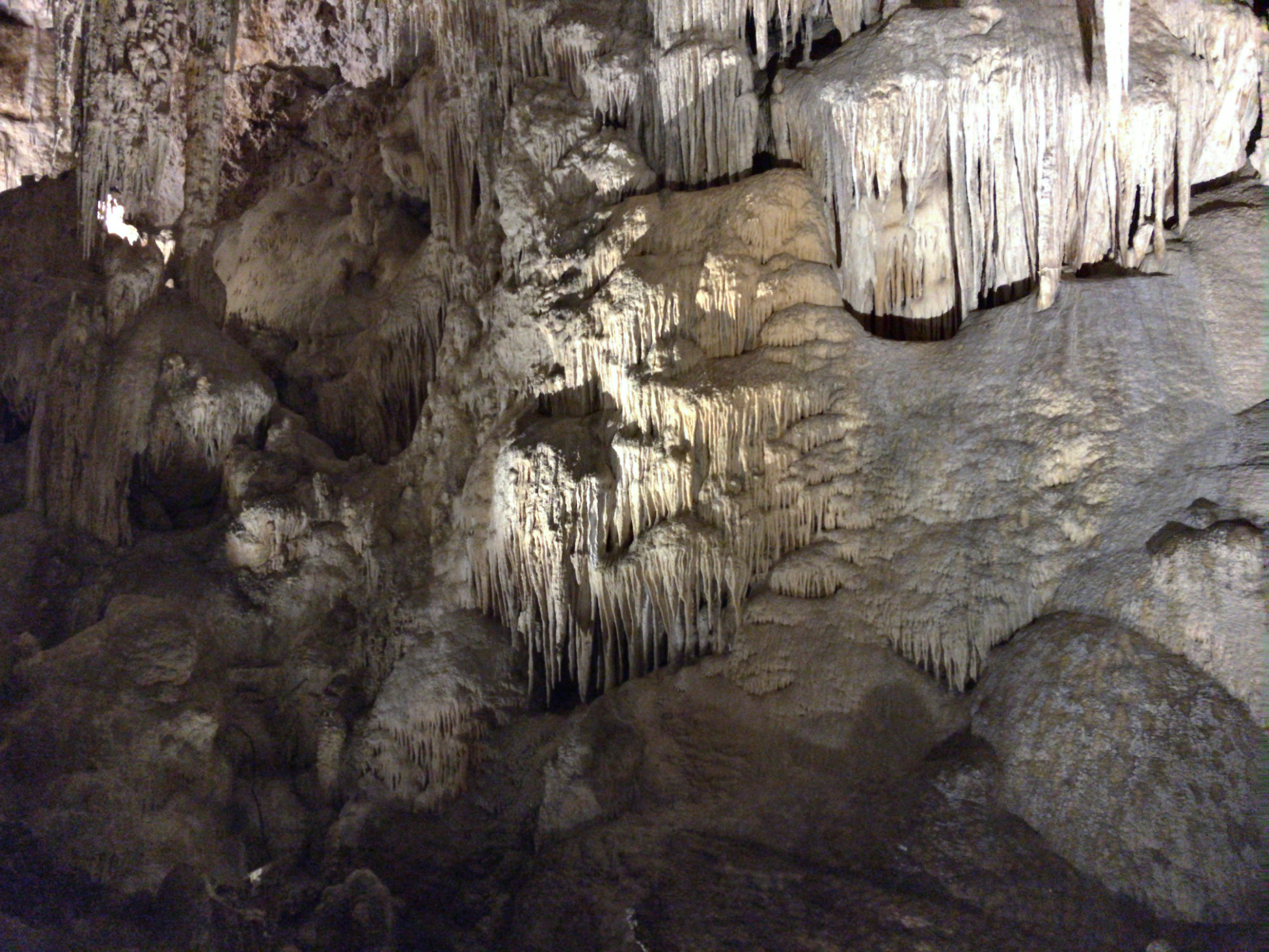
 The Dragon and The Phoenix