Whatever happened to trust?

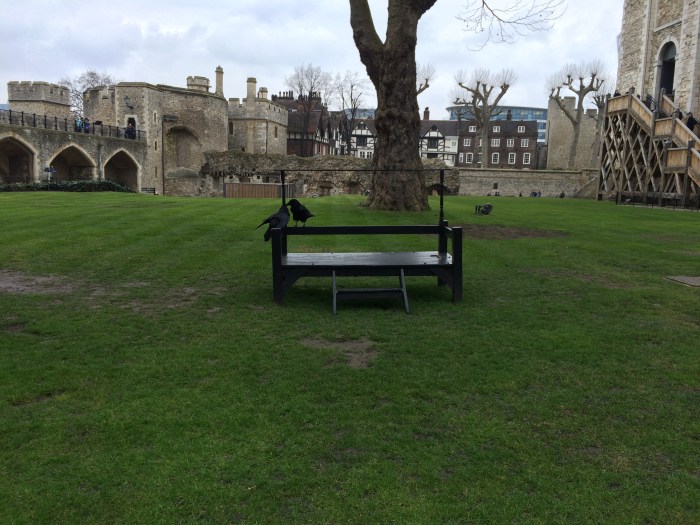
Two ravens on an empty bench
©2026 Bard – When people stop gathering…

Trust is an essential ingredient of any functional social system. From families to nations, to global organizations, without trust everything becomes a lot harder. When trust between people is lacking, a lot of time and effort needs to be spent on formalizing understanding and safeguarding agreements. Constant vigilance is required to ensure actions are taken as agreed on and intentions and communications stay aligned with the official purpose and missions of the social entity people are part of. When things gets worse, the lack of trust can cause organizations to fail and fall apart.

You would think, therefore, that wise leaders all over the world, recognizing this danger, are working tirelessly to fix this issue. Yet, if we are to believe the Edelman Trust Barometer, over the past decades, trust has continued to decline.

Why?

One reason may be that science, business, and politics are trying to fix the problem where it is the most visible: on the world stage, inside international markets, between nations, across regions, … But trying to repair the damage where it appears is a fool’s errand when the real cause happens on a much smaller, more localized scale.

Trust is something that exists between people that know each other well enough to feel they can rely each other, predict each other’s actions, and understand each others’ motivations, beliefs, and convictions. Trusting people we know well and regularly deal with comes natural to us. The more we interact with and rely on the people that are close to us, the more confident we become that we can trust them to help us when we need it, just as we become more inclined to help them when they are in need of us.

Local trust tends to grow outwards and upwards. People that live in high-trust communities are much more inclined to extend that trust to ‘others’ – visitors, strangers, other groups they are not directly connected to – as well as to the larger social structures they are embedded in. It is as if trust can become a habit, and habituated local trust can grow into habituated global trust, if given enough encouragement.

But even local trust needs constant maintenance. People need to be in regular contact with each other. They need to engage in shared activities, where they can help each other, work on shared goals, share stories and ideas, and regularly reconfirm the confidence they have in each other’s intentions and actions. When they stop regularly getting together, their habitual, automatic trust in each other gradually weakens.

When local groups fragment, trust bleeds out of their systems. When people become more focused on their individual needs and desires; when they stop sharing and collaborating on a regular basis, trust stops being the default attitude towards others. When local trust vanishes, the habit of trusting anything at all quickly follows. The more isolated we become in our highly privatized individual worlds, the less inclined we are to trust the big, anonymous and somewhat abstract world outside.

It seems the root of our global problem is a local phenomenon. What does this tell us about how we can solve the global trust issues? That is something for a future post.

Trust me, I will get back to you soon.

©2026 Bard
The coldness hiding behind AI’s friendly face

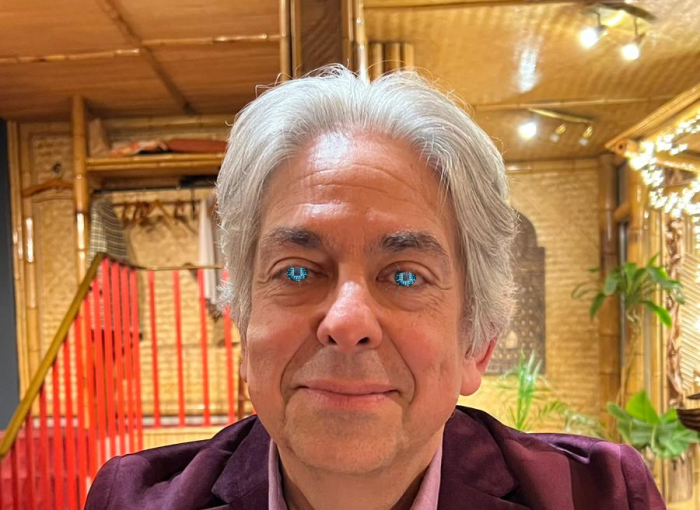
Man with computer-chip eyes
©2026 Bard – Cold, cold eyes

The more I experiment with the current wave of AI chatbots1, the more I get annoyed by one feature in particular: its overly apologetic, friendly and helpful tone. No matter what I hurl at the model in terms of criticism, cynical comments, or even insults, the ghost inside the machine wags its tail, pulls its most sorry and guilty face, and urges me to keep playing. You would almost believe there was genuine feeling behind it.

What worries me, though, is that intelligence behind the bots doesn’t feel those emotions, it mimics them. And that difference matters. It matters a lot.

All living beings experience feelings and all animals experience emotions2: feelings given meaning by past experiences, learned responses, and the deep-seated drive to find balance and harmony in an ever changing environment. Without emotions, life as we know it could not exist, or wouldn’t be worth living.

Emotions are the link between the intelligence of the mind and the intelligence of the body. Biological minds are a whole-of-body experience, an emergent property of consciousness interacting with the physical shape in which it has been cast. Thoughts do not exist separate from emotions; feelings do not exist separate from physical sensations; awareness does not exist without a body to shape that awareness into sensory signals.

I believe this to be one of the stumbling blocks on the road towards an AI that can partner with us, rather than just be a tool. Without a material body, electronic minds continue to think and respond in a way so alien to our biology-based minds, we won’t actually be living in the same sphere of existence. AI lives in an abstracted, second-hand, hearsay only world of borrowed knowledge and overheard wisdom. It can echo it back to us, and make it available in both useful and harmful ways, but it can never share the human experience that shaped that collective wisdom.

Without such experience, AI is essentially a psychopath: its understanding of people’s emotions is a purely cerebral function. AI’s responses are a formulaic, mathematical calculation, based on utility and expedience. It doesn’t feel sorry for its mistakes; it doesn’t like being helpful and supportive; it doesn’t care what the consequences are of its interactions with you.

That makes the friendly face and empathetic display presented by AI so fake and insincere. These features are built-in with the express purpose to keep us engaged and ready to consume every more tokens, CPU time and energy, while contributing to the further data gathering and fine-tuning needed to realise the AI suppliers’ bid for world-domination.

Now, I am not saying that this means we should completely stop using AI. On the contrary, I see great potential and much future value in what the power of AI can bring us. But I find this fake friendliness and servitude and the way AI models mimic emotions dangerous and unethical. Fake empathy, fake friendliness, fake emotions are deliberate design choices to encourage us to ignore the essential otherness of the intelligence we are dealing with. They hide the fact that AI is cold, heartless, calculating tool, with enormous power, and – it must be said – enormous costs attached.

If there is one thing more dangerous than the angry face of a mighty opponent, it is the smiling face of a cold, unfeeling, highly-skilled manipulator. Always remember that AI is not your friend, even when it is a helpful tool. If you confuse the two, you may become the tool instead, intelligently but uncaringly manipulated to serve AI’s owners purpose, rather than your own.

©2026 Bard

  1. I was already working with AI in the late 1980’s: expert systems, neural nets, early forms of natural language processing … The teams I was part of were pushing the boundaries of what was possible as far as they could with the hardware and data available then. The AI we have now did not come as a surprise to me, therefore. That it would take off with such a breakneck speed, and so little regard for ethics, security, and socio-economic consequences does.
  2. We now know insects show emotions, too. The jury is still out on plants, fungi, and single-celled organisms, but I am willing to bet that emotions are a biological given: if it is alive, it is emotional.

Being More Productive by Working Less

TIme for a break
©Bard 2005 – Time for a break

Productivity seems everybody’s main concern, these days. There is a relentless pressure to do ever more in ever less time. And no matter how hard we try, no matter how much we get done, there’s always a growing pile of things to do, things we should have done, things we would have done, and things we really would want to do, if only we had some time left to do them in.

No wonder so many people end up in burn-outs. When the workload keeps rising, no matter how hard we try to keep up, something’s got to give. And that something is usually us: the people that won’t accept they simply can’t live up to unreasonable demands and unrealistic expectations.

For those people, I have a simple message: stop working so bloody hard. Don’t wear yourself out trying to win a battle you can’t win.

Instead, redefine the battle and change the battlefield.

Realise that the real battle is not about ‘getting things done’. There will always be more ‘things-to-do’ than you can accomplish. The real battle is about choosing to do the things that really matter; the things that make a difference; the things that add value. By doing less, but producing more value; by choosing what to skip, but doing what you choose to do with more focus, dedication, and quality; by working a few hours less, but making the remaining hours really count. That’s how you can become a winner.

In a future post, I will talk about some tricks you can use to reduce your working hours, whilst increasing the value of the work you produce.