Why I Started Sweating the Small Stuff

For a long time now I have been worrying about saving the world. It sure as heck needs saving, but my attempts at doing so have not made much of an impact. At least from what I see in the daily news.

But then something happened that changed my perspective.

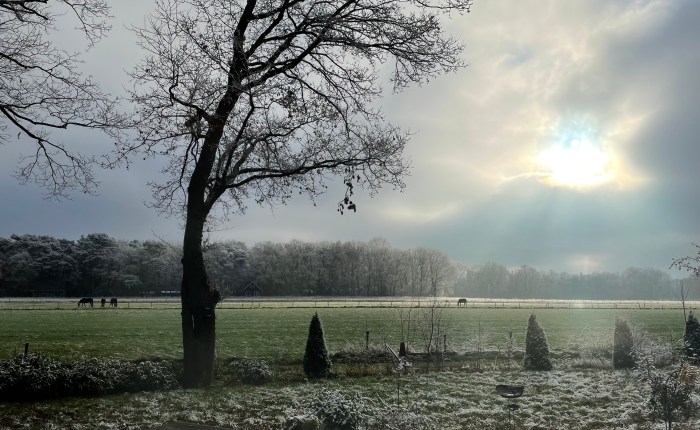
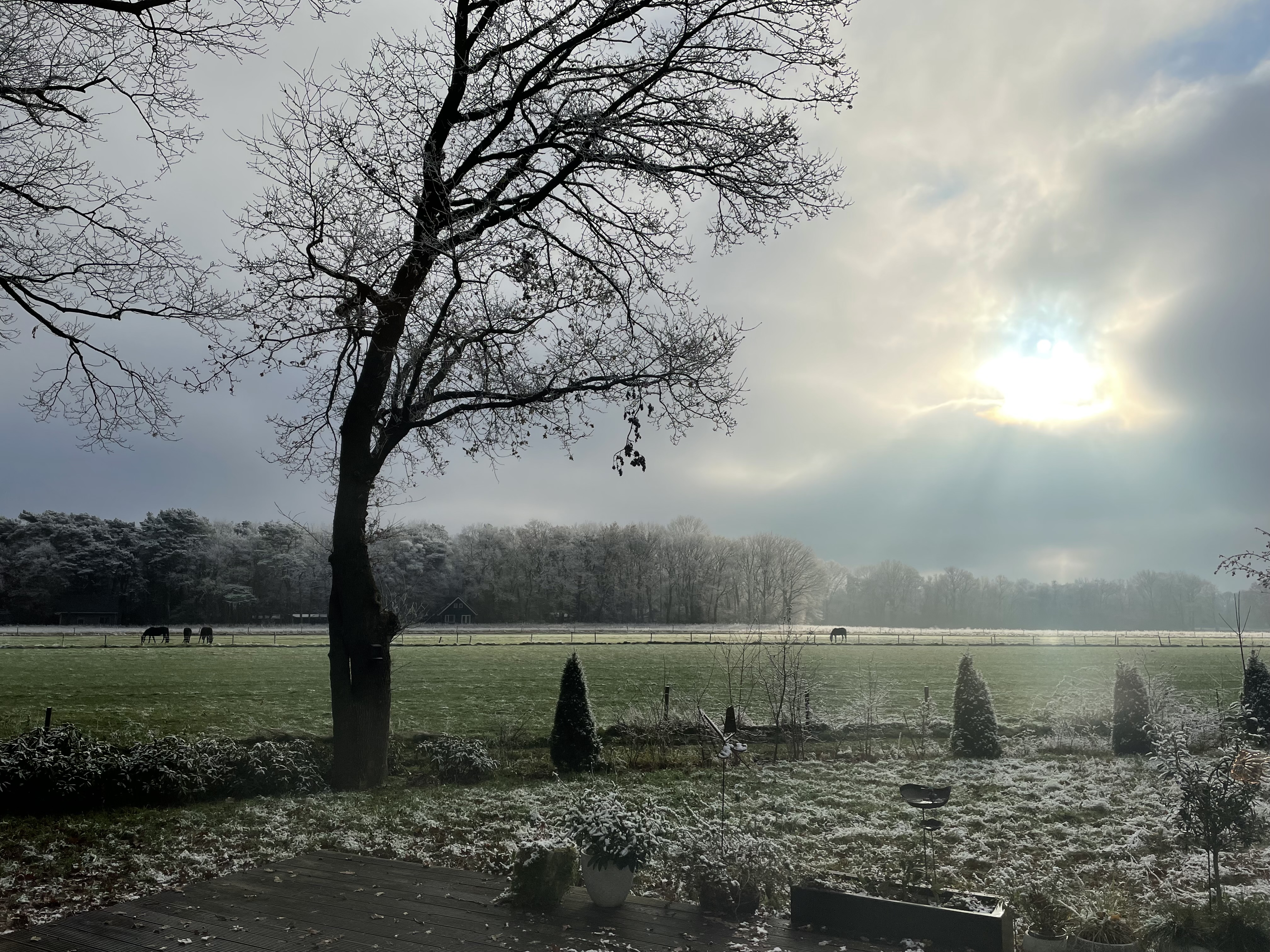
We moved into a new place, surrounded by a forest property. The forest needed attention. Some trees are dying, other parts are being taken over by an aggressive, invasive species, we need more diversity, we need some tracks to make the property more accessible… It felt like another big project: saving the forest. Of course, what it came down to in the end was to just pick something small, and start there. We planted some saplings, we removed some of the invasive trees, we started clearing a track. One little step at the time. And now, just over a year later, we are beginning to see the fruits of our labour. In very small ways the forest is starting to look better, more vibrant, more in balance.

None of the changes we made are really big. And most of the improvements we see are simply nature doing its thing. But the small things we are doing have just enough impact to help nature do so.

So, more and more now, I tend to look for the tiny differences I can make on a daily basis, trusting that the big things will take care of themself. I nudge rather than change things; I support rather than push things; I encourage rather than force things.

I still don’t know if I am saving the world, but I am certainly saving my sanity and gaining a healthy combination of humility, fulfilment and peace of mind.

So, don’t come to me expecting big, world-changing results. But if you have something small, positive and worth doing, I’ll be happy to support you. In whatever little way possible.

Connecting to the Land: finding the stories

A while back I shared that I felt my Country was reclaiming me. One part of that process was reconnecting with Nature. Feeling in touch with and being welcomed by my re-discovered natural environment gave me a feeling of coming home I hadn’t expect to find.

But there is more to this process. There are the stories hidden in the land I am reconnecting to.

For decades I lived in Australia. One of the comments my European relatives and friends frequently made when visiting was that Australia has great natural beauty, but is lacking in history. They see it as a young country, lacking in monumental buildings, historic towns and the occasional ruins of past civilisations. On the surface they are not completely wrong. Compared to other continents, the evidence of long-term human occupation of the land is far less visible. The actual human history of Australia, however, runs much deeper than most of the monuments and archeological sites visited by tourists elsewhere in the world.

How deep that history goes only becomes apparent when one discovers the oral history, art, music and dances performed by Australia’s indigenous people. They tell stories that are 10s of thousands of years old. Their art contains knowledge and insights that has been passed on for hundreds of generations. And, interestingly, instead of being connected to man-made monuments, most of those ancient stories, songs and artworks are intimately connected with the land itself. Every natural feature has its story, it seems, and is, through that story, connected to many other places in the continent. To an indigenous Australian, walking through Country is never just a walk from place A to B; it is simultaneously a walk through the history of their people, a revisiting of landmarks they see as their ancestors, and a re-activation of all the knowledge and learning of the generations that went before. Every step they take is securely anchoring them to Country, telling them in no uncertain terms that this is where they belong.

I came back to The Netherlands thinking I would find plenty of visible history but little of the non-tangible story kind. As it turns out, I was wrong.

Sure, the visible stuff is easier to find. It is in all the travel guides, after all. But the land here is full of stories, too, if you know where to look for them. They are just buried much deeper than in Australia, where there are still people actively keeping them alive.

There is a little lake near our house. It is man-made. Not because people wanted to have a lake, but because they were digging out the peat they needed for fuel to warm their houses. The landscape is dotted with small lakes and waterways, speaking of people burning the soil because there weren’t trees enough around to harvest for firewood.

Some of the lakes are almost perfectly circular, which gives them an even more artificial appearance. But those lakes, called pingos, are actually a natural phenomena, caused by ice and meltwater during the ice ages that covered all of the land here. Put together, the land speaks of the slow forces of erosion and the much faster forces of surface mining, both creating and recreating a very unique landscape.

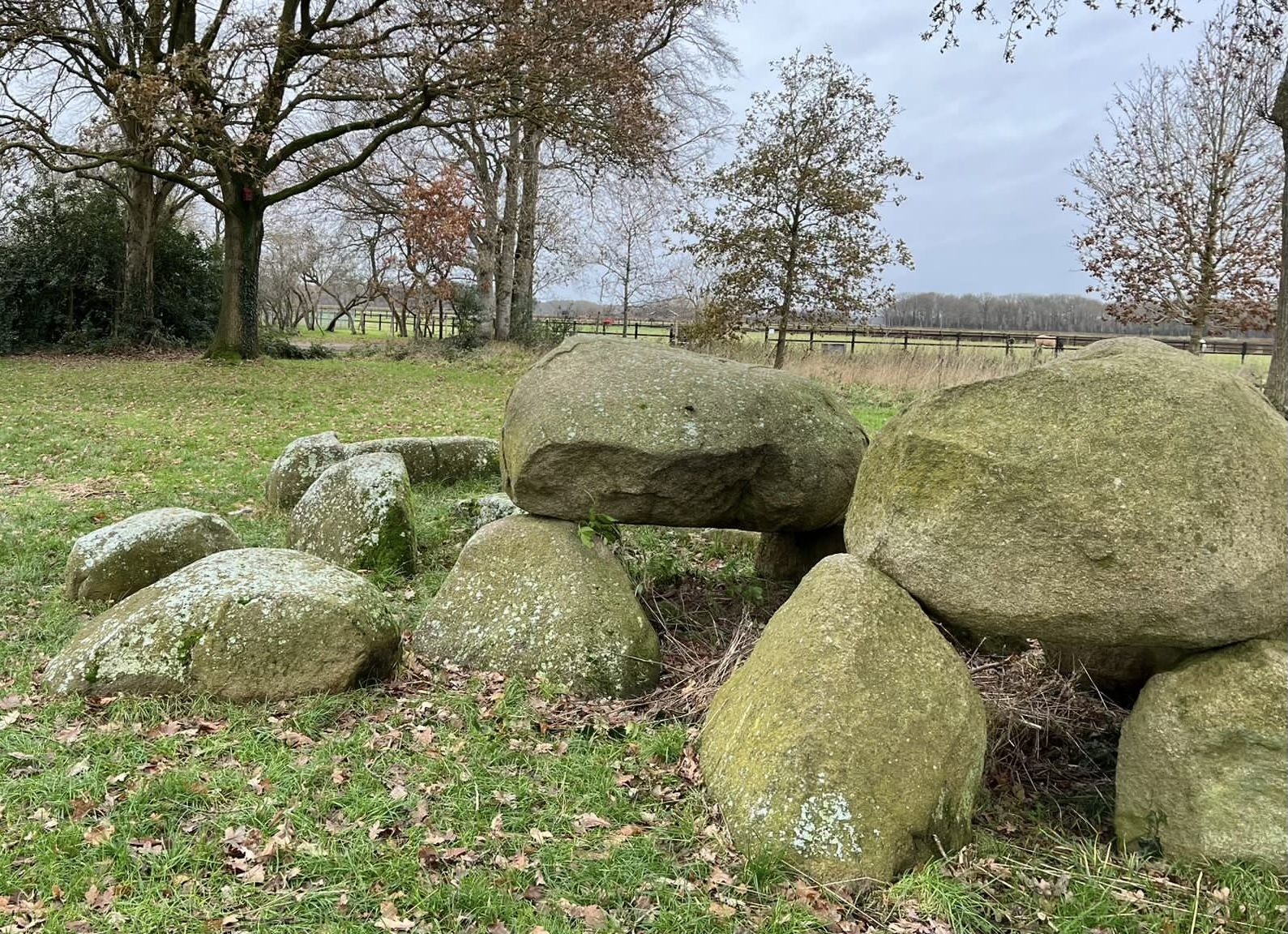
There are some ancient monuments here, too, from the time people here were hunter-gatherers. Huge boulders are grouped together and capped with even bigger ones to form hill-graves we call “Hunebedden” (dolmen), literally meaning “beds of giants”. Built long before the later farmers of this land arrived from the East, they were incorporated into local legends about the giants that roamed the land in ancient days. Some of those legends became fairy tales, others got incorporated into local lore, and some made it into religious tales of saints and demons battling it out amongst the giant stones.

It is till possible, with some research and a lot of patience, to piece together a tapestry of half-forgotten, half-misremembered storylines that were once the way our ancestors here gave meaning to the landscape around them. Doing so, I find, is another way in which this Country is reclaiming me and weaving me into its very being. The more I stumble across the ancient stories, the easier it becomes for me to not feel strange, separate and alienated but part of everything around me. The more I retell and reconstruct those old narratives while exploring the land, the more I feel I am becoming a participant and caretaker, not just a curious tourist passing through.

On Petulant Kings and Childish Tyrants

I often wonder about humanity’s tendency to choose and follow petulant kings and childish tyrants; not just allowing them to rise to power, but enabling them to commit abhorrent crimes against humanity and destroying whole civilisations, not seldom including their own.

You would think that a tendency to choose bad rulers would, over time, be bred out of our genes. What evolutionary benefit can there be in this penchant for leaders that do more damage than good? Yet, we fall for the same types again and again.

Why? What mechanisms are at play here that not only let those types rise to power but help them grow their power to ridiculous heights, even when their childish and destructive behaviour is clearly visible to any discerning adult?

Since this pattern is so common across civilisations, I suspect it must be encoded deep in our DNA. I can only speculate – since we don’t really know how our DNA encodes our behaviours – that petulant kings and childish tyrants rely on the misapplication of otherwise healthy and necessary instincts.

Humans have deeply ingrained parental instincts, for example, that lead us to want to protect and care for helpless infants. Maybe infantile tyrants trigger that same instinct, in an exaggerated and dysfunctional way, like oversized and unnaturally brightly coloured eggs trigger a fanatical breeding impulse in birds. This could make us want to protect and even cherish an overtly childish and irresponsible leader.

Another pattern I suspect is our instinctual longing for the superhuman parent we lost when we grew up and saw our parents exposed for the frail and flawed human beings we never thought they were. There is something deeply comforting in the belief that our parents are all-knowing and all-powerful. It allows us to be the innocent child, powerless but safe under the protection of beings far superior to us.

Maybe we all still long to be that child, bowing in awe to the will of our superhuman parent. That could explain why we are drawn to individuals that openly and defiantly break laws, rules and social conventions. It would make irresponsible, boastful and arrogant leaders strangely attractive to the inner child we lost in early childhood. It would also explain why kings and tyrants through the ages have always been portrayed as larger-than-life, close to God or Gods, and possessed with magical and mystical powers.

David Graeber and Marshall Shalins in their book “On Kings” argue that we don’t want our kings and rulers to obey the law but to stand above it. A king that is constitutionally limited lacks that superhuman, even supernatural appeal that a ruler that answers to nothing and no-one seems to have. If I see what tyrants historically got away with, and often still do, it could be because of their followers’ need for someone who is truly above all human laws. That could be an echo of what the powerless child saw in its parents before they fell from grace.

The paradoxical combination those two instincts – the drive to protect and cherish our children, triggered by adults that behave like over-sized toddlers and the need for superhuman parent figures, triggered by ruthless individuals openly flaunting laws and conventions – can explain the fanatical devotion and protectiveness paired with unquestioning obedience you so often see destructive tyrants and misbehaving kings surrounded with.

If my suspicions are true, humanity is constantly at risk of being tricked by some of our deepest instincts into admiring, enabling and obeying deeply flawed, psychopathic and destructive individuals. Not because we consciously choose to do so, but because our instincts drive us to it.

So, what can we do about it? Are we doomed to fall for infantile bosses and ridiculous rulers forever?

I certainly hope not. I believe we are more than our instincts. I believe we can train our self-awareness and self-control to recognise and self-correct when our instincts trick us and are being used against us. I also believe we can shape our culture – the shared assumptions, behaviours and stories that our society lays on top of our instincts – to protect us from such abuse and trickery. It does mean we cannot let our culture be dictated by those who want to take advantage of such manipulation. We must, collective, choose to steel ourselves against the abuse of our vulnerable instincts, so we are less inclined to run blindly after rulers that lead us astray.

(Too) Close to the Edge

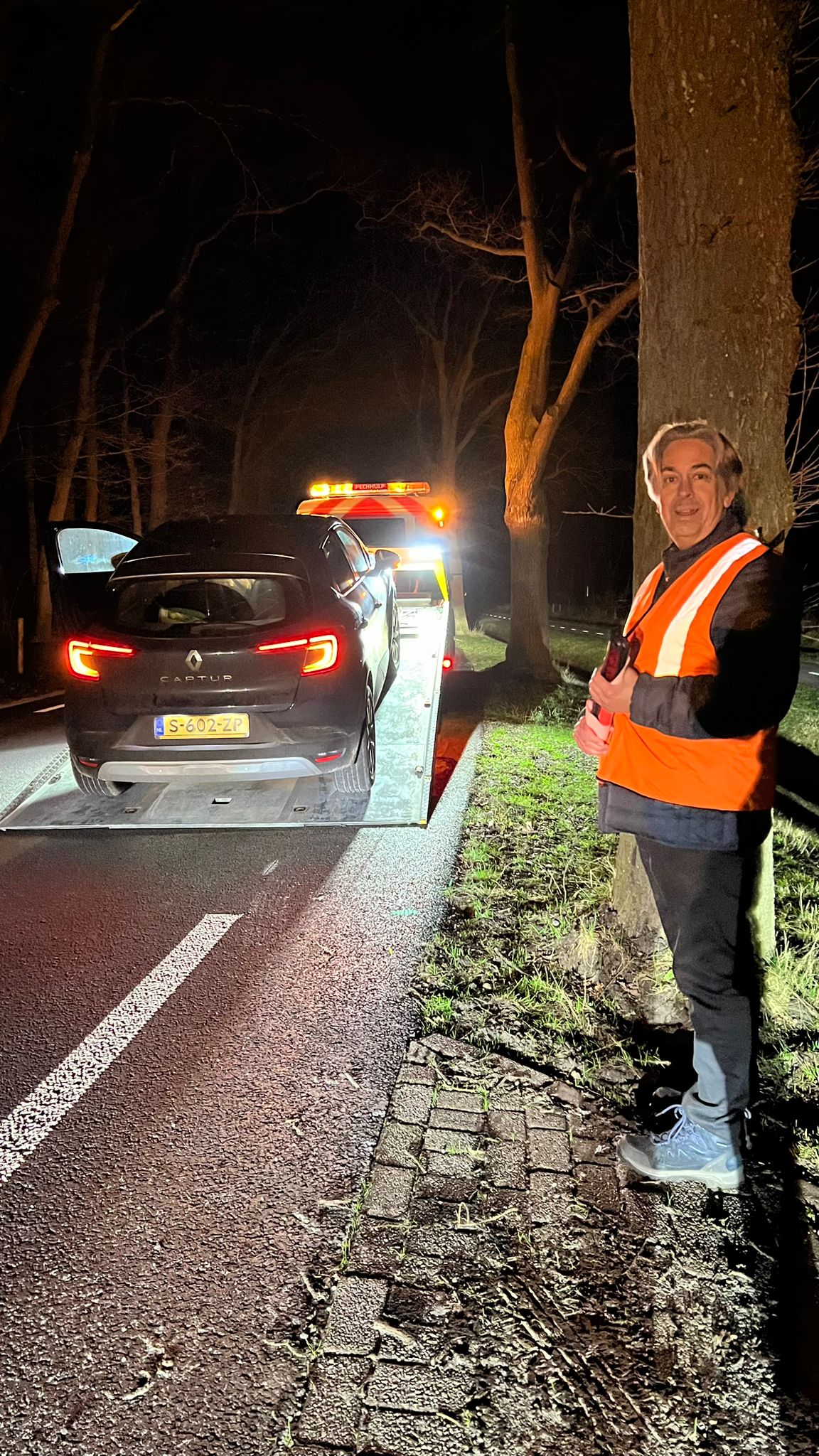
Some time ago I posted about the kind strangers and unkind systems I encountered when our car broke down rather dramatically in the middle of a fairly busy provincial road. Kind strangers got my wife and I safely home; unkind systems made it very hard for us to regain our mobility. For those wondering where this adventure has left us: today we have been able to pick up a rental car the dealer is lending us – with no costs attached – for the duration of the repairs. So, that part of the mishap has come to a satisfactory conclusion.

For me, however, that is not the end of this incident but rather the beginning of a learning journey. I am always trying to learn from the disruptions and upheavals in my life. Partially to find out what I can do differently in the future to prevent the same things from happening again. But also because retrospective learning is what gives such incidents a meaning beyond merely being annoying, painful or worse. It helps me put things in perspective.

So, talking to the mechanic who is working on my car today, the first thing I asked was if there was anything I could have done differently, either to prevent the car from malfunctioning or to get if safely off the road when it did. He assured me I had done nothing wrong. In fact, when he took the car for a test-drive after resetting the on-board computer and running some diagnostics, the car malfunctioned in exactly the same way, leaving him stranded in the middle of a roundabout. He had to be rescued by his colleagues from angrily honking cars driven by frantically gesticulating drivers. Clearly the car was at fault, not the driver.

So then question became: what exactly is causing the car to play up in this way? Why is it doing this? What part is at fault?

Interestingly enough, the mechanic explained that none of the parts were faulty as such – they all did what they needed to do, pretty much performing according to their design specifications. However, when put together, a few of the components, under very specific circumstance, managed to create a combined spike in electricity. That spike triggered the onboard computer’s safety system shutting everything down to prevent the electronics being fried. In other words: nominally correctly functioning parts could, without any of them actually malfunctioning, cause a sudden collapse of the whole system’s functionality; in fact bringing it to a dramatic mid-journey emergency stop.

To make a long story short (the mechanic and I talked for several hours, while waiting for the rental car to arrive): what was wrong with the car had less to do with its components than with the way they operated together. When more than a few parts came close to their edge-condition, the result could push the combined system over the edge.

So, what does that teach us?

First: none of the parts are to blame. They all did what was expected of them. So, no blame there. Second: the system as a whole had been designed with enough fail-saves to prevent major damage. So, no blame there either.

However, fail-safe isn’t the same as failing safely. I think there is a lot of room for improvement in the way the car stopped functioning. For instance, a manual override of the steering and brake system locks would at least allow the driver to push the car off the road once it had stopped. Perhaps the system could have degraded more gradually and gracefully, giving the driver more time to reach a safe place to stop the car. And I would argue that the warning signals on the dashboard could do with driver-centric redesign as well. Most of the warnings may have been useful for a mechanic trying to diagnose what was wrong but didn’t help me, driving the car as it was breaking down, understand what was going on and how best to respond to that. Just a small example: “inspect braking system” is not a useful instruction when you are going 80kms an hour and your car is suddenly and erratically applying the brakes.

Second: tolerances and redundancies can look wasteful on paper, but can make or break a system under stress. The mechanic and I suspect that some of the components had been under-dimensioned to save costs. While technically within specifications, they didn’t have the extra ‘wriggle room’ to handle various edge cases gracefully.

Finally: complex systems, especially when tightly integrated and full of dependencies become sources of unpredictable exceptions. Our car’s onboard computer is full of rule-based software telling it how to respond to all the predictable exceptions. But rules-based systems are helpless in the face of unpredictable edge-exceeding cases. It should be the designers’ responsibility to a) reduce dependencies between components; b) built in more tolerances and redundancies to improve the system’s ability to recover (or degrade) gracefull from faults that occur; and c) provide an interface that is driver-centric, not car-centric to assist the driver in safely getting the car out of harms’ way when its systems are failing.

I am not blaming the designers, the manufacturer or the mechanics for what happened. Blame doesn’t teach us anything useful. But I do hope somebody somewhere learns from this and applies those lessons to their own situation to get a better outcome than the one I got the other day.

What’s the Deal? – On Contracts and Agreements

For a few weeks, we had a rental car on loan while waiting for our lease car to be repaired. The rental car was organised by the dealer, not, as I expected, by the lease company.

Several people reacted to my story about the lease company’s reluctance to keep us mobile after our car malfunctioned. A common assumption was that a lease contract is a DAAS (Driving as a Service) agreement. The car shouldn’t matter, what should matter is that we would stay mobile.

To be honest, that was also my assumption when I signed the lease contract. Or, to be more precise, when I signed the lease agreement, which was a shortened version of the full contract. The full contract was available on the lease company’s website. I remember looking through it at the time but not taking the time to read the whole thing, as it was many pages long and written in the kind of small-print legalise that makes your eyes water and your head hurt.

As it turns out, my understanding of the agreement I made with the lease company doesn’t quite match their understanding of what we agreed on. The basic contract is little more than a financing deal, with some additional services thrown in around maintenance, insurance and a financially attractive way to switch to a new car after a few years. Whereas the lease company’s website and informal communications are full of promises around ‘driving without the hassle’, ‘carefree driving’, ‘removing the burden of ownership’, etc. the actual contract has been carefully constructed to outline quite a few conditions, exceptions and caveats that undermine those promises. Had I taken the time and trouble to study the full contract before signing the agreement, I might have negotiated a different agreement, or go to a different lease company.

What we are left with is a mismatch between my understanding of the deal and that of the lease company. Whose fault is that? Mine or theirs?

Legally speaking the fault is mine, of course. Though not included in the paperwork the lease company sent me, the full contract with all its clauses and attachments was available online. I should have studied that before signing the agreement.

Ethically speaking the answer may not be that straightforward. The lease company didn’t exactly advertise the fact there was a long and complicated contract behind the simple agreement form I signed, for instance. It was only hinted at in a footnote, printed in super-fine print, at the bottom of the (mostly empty) page. Obscured by their logo and some irrelevant company information. Almost as if they tried to keep me from reading it. And the contract itself required close-reading and a higher-education level understanding of English to fully make sense of what it stipulated. Some very smart lawyers must have heaps of fun finding creative ways of denying essential services while seemingly making them available.

I believe that a customer-focused company, one that really cares about the well-being and satisfaction of their customers should feel responsible for making sure their customers understand the deal they are signing up for, especially when that deal is complex and prone to assumptions and misunderstandings. In such cases moral considerations should inform their duty of care, not legal arguments fuel their tendency to not care a damn.

The Unkindness of Strange Systems

I had planned to write a long-ish follow-up to a previous post about kind strangers, adding some examples of people going the extra mile to ensure my wife and I came home safely after our ordeal with our car’s sudden death.

Unfortunately, the days after the event were filled with the opposite experience: unkind systems practically designed to make our lives as difficult as possible.

I found myself caught between 5 or 6 different parties, all supposed to help us resolve the unfortunate situation we are currently in: at home in a rural area, far from public transport, without a car for a period of time that could last days or even weeks. The solution is seemingly simple enough: if we could get a replacement car for the duration of the repairs, there would be no real issue. But 6 parties, with at least a dozen systems to work through between them quickly turned this into a Kafka-esk labyrinth with nothing but dead-ends.

The lease company pointed out the car is still under warranty, so it’s the supplier’s responsibility to provide us with alternative transportation. The supplier referred us to the dealer who is carrying out the repairs. The dealer tried to help us but discovered his system doesn’t allow him to book a car for us, since I am not registered as the owner of the car – the lease company is. The lease company then tells me they can activate our insurance, and make a claim through them. But the insurer says their system cannot take action until an official damage claim has been put in. I would be happy to do so, but was told the repairing dealer was the only one who could do that – after having carried out the repairs. Only then could a replacement car be requested, except, of course, that wouldn’t be necessary any more, since by then the car would have been fixed and ready to be returned to us.

By the end of the day I have had conversations with the lease company, the supplier, the dealer, the tow truck company, the insurer, and a rental car company … every time getting stuck on similar systemic issues. It is evening here now, and so far, nothing definite has been decided. With so many unkind systems to throw obstacles on our path, it could be days before we have a solution.

I am sure it will sort itself out eventually. But what is striking is the difference between the kind strangers willing to bend the rules to assist us and get us safely home, and the unkind systems messing things up. I can only assume their unkindness is not deliberate. And I have no complaints about the operators I talked to, all trying to their very best to find a solution. But each system was designed to solve a small part of a much larger puzzle, with no real understanding of the total complexity. Built around assumptions, and rules based on those assumptions, that cover an even smaller part of the puzzle – the part in which everything goes according to plan. Which it seldom does.

My Country of Birth is Reclaiming Me

My Country of Birth is Reclaiming Me

I have been somewhat absent from this blog in the past 2 years. Not completely, but I was far less active than in previous years.

One of the reasons is the fact that circumstances largely beyond our control have forced my wife and I to relocate back to the country we were born in, The Netherlands, and leave our country of choice, Australia, behind.

That process, happening in the midst of the COVID pandemic, was messy, hectic and rather painful at times. But the transition is behind us now and we are settling into our new home, in a beautiful forest in the north of the country.

One interesting thing I am noticing is how the country seems to be reclaiming me. After living in Australia for more than 20 years, I felt (and still feel at times) more Australian than Dutch. I came back to this country feeling a stranger in a strange land; a visitor to a country that didn’t look much like the country I left behind in the previous century.

But in the past few months, that feeling has been changing. Gradually, I beginning to feel my old roots – the ones I thought I had severed and discarded when I migrated to Australia – come to life again and take hold in the soil of the forest around me. I am beginning to recognise the feel of the sand under my feet, the sounds of the birds and insects, the smell of the grass and the surrounding trees. And I am beginning to feel Home again.

What makes this process interesting to me is that it is not the nation or its people that is reclaiming me, but its Nature, its soil, its COUNTRY, as the Australian Aboriginals would call it. It is a feeling that had slowly grown on me in Australia, but – because I wasn’t born there – would never completely take hold: that of belonging to country. Here in The Netherlands, I feel I am welcomed back and told I do belong here; that I never stopped belonging here, no matter how far away I was.

For me, this is an important reminder of how deeply intertwined we really are with Nature, with the land on which we are born, live and die. We are not separate from Country, we are its offspring, and tied to it through many, many invisible roots and connections. We may have created this illusion of man vs. nature, or man over nature, or even man completely separate from it, but we are, in our core, just another form of Nature. Nothing more, nothing less. Only when we acknowledge that and let our country fully claim us as its own can we be truly happy and in harmony with ourselves and the world.

Here is to coming Home and being reclaimed. Here is to Country.

Happy New Future.

One Fine Day – Now available on Amazon

For all those wondering where my short stories have disappeared to: they are now available in Kindle, Paperback and Hardcover format here: https://www.amazon.com/dp/B0B6RP4K9G/ref=cm_sw_em_r_mt_dp_4BMMHAHVD22T8VMG4V7G

Go check it out. 16 intriguing stories with handcrafted illustrations by the author himself.