What could possibly be wrong with loyalty?

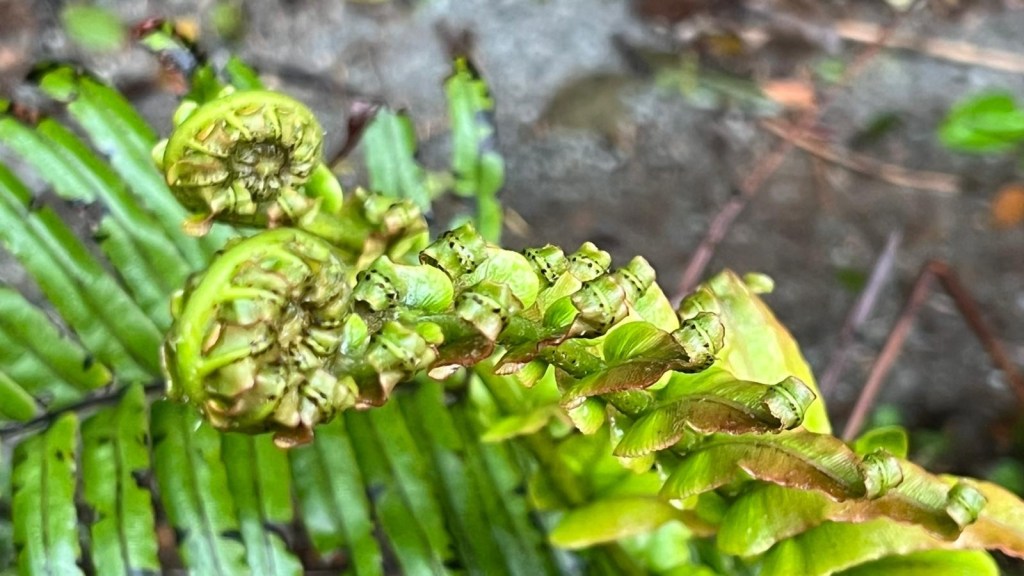
Is it a fern, is it a tree? Why would it be anything to me? ©2025 Bard

What could possibly be wrong with loyalty?

Loyalty is often touted as a positive emotion, something to be admired and rewarded for. Yet loyalty has been the cause of suffering throughout known history and probably long before as well.

Loyalty pressures the individual into sacrifice and suffering ‘for the greater good’. Loyalty motivates groups into discrimination, exclusionism and violence towards ‘others’. It can even lead entire nations into waging wars and committing acts of mass murder and genocide, driven by the conviction that this is the loyal thing to do.

I have always wondered why loyalty was so often expected of me in contexts I didn’t sign up for. I didn’t choose to be born where I was born. I didn’t choose to belong to the religion of my parents, grandparents, and beyond. I didn’t vote for the crazy leaders ruining the countries I have lived in. Yes, more often than not, I was told I owed some sacred duty of loyalty to my family, tribe, religion, country and leaders, to the point of being expected to commit acts of violence against others and even happily give up my life in service of those nebulous but apparently deeply sacred construct I supposedly belonged to.

It seems to me that loyalty to any particular group is always a dangerous proposition, as it automatically and unavoidably means excluding other human beings from my duty of care. Loyalty to ‘us’ always means turning away from ‘them’; the others that are a threat to us, want the good things we have, and would rob, enslave or kill us is we gave them even half a chance. Any care, empathy or concern I might feel for those others, I am constantly told, means disloyalty to those I should think of as mine. As if my capacity for loving kindness is too limited to be wasted on outsiders.

I have always deeply mistrusted loyalty as a motivator, especially as a motivator for exclusion, distrust, violence and hate. Of course, I feel a special fondness and connectedness towards those who are close to me. Of course, I feel gratitude and even a sense of indebtedness to my ancestors who worked so hard and often suffered in order for me to live the beautiful life I am living. I have no problem with being asked to do something in return; to make positive contributions to my family, tribe and nation. But my loving-kindness, my capacity for helping others, my compassion for any life that is suffering is not limited to my in-group only. I see no reason to exclude any living being from my duty of care or compassion. All life is one, as far as I can see, and therefore has an equal claim to my loyalty and love.

No living being of any kind deserves to be excluded, neglected, humiliated, enslaved or killed just for being not us.
On Petulant Kings and Childish Tyrants

I often wonder about humanity’s tendency to choose and follow petulant kings and childish tyrants; not just allowing them to rise to power, but enabling them to commit abhorrent crimes against humanity and destroying whole civilisations, not seldom including their own.

You would think that a tendency to choose bad rulers would, over time, be bred out of our genes. What evolutionary benefit can there be in this penchant for leaders that do more damage than good? Yet, we fall for the same types again and again.

Why? What mechanisms are at play here that not only let those types rise to power but help them grow their power to ridiculous heights, even when their childish and destructive behaviour is clearly visible to any discerning adult?

Since this pattern is so common across civilisations, I suspect it must be encoded deep in our DNA. I can only speculate – since we don’t really know how our DNA encodes our behaviours – that petulant kings and childish tyrants rely on the misapplication of otherwise healthy and necessary instincts.

Humans have deeply ingrained parental instincts, for example, that lead us to want to protect and care for helpless infants. Maybe infantile tyrants trigger that same instinct, in an exaggerated and dysfunctional way, like oversized and unnaturally brightly coloured eggs trigger a fanatical breeding impulse in birds. This could make us want to protect and even cherish an overtly childish and irresponsible leader.

Another pattern I suspect is our instinctual longing for the superhuman parent we lost when we grew up and saw our parents exposed for the frail and flawed human beings we never thought they were. There is something deeply comforting in the belief that our parents are all-knowing and all-powerful. It allows us to be the innocent child, powerless but safe under the protection of beings far superior to us.

Maybe we all still long to be that child, bowing in awe to the will of our superhuman parent. That could explain why we are drawn to individuals that openly and defiantly break laws, rules and social conventions. It would make irresponsible, boastful and arrogant leaders strangely attractive to the inner child we lost in early childhood. It would also explain why kings and tyrants through the ages have always been portrayed as larger-than-life, close to God or Gods, and possessed with magical and mystical powers.

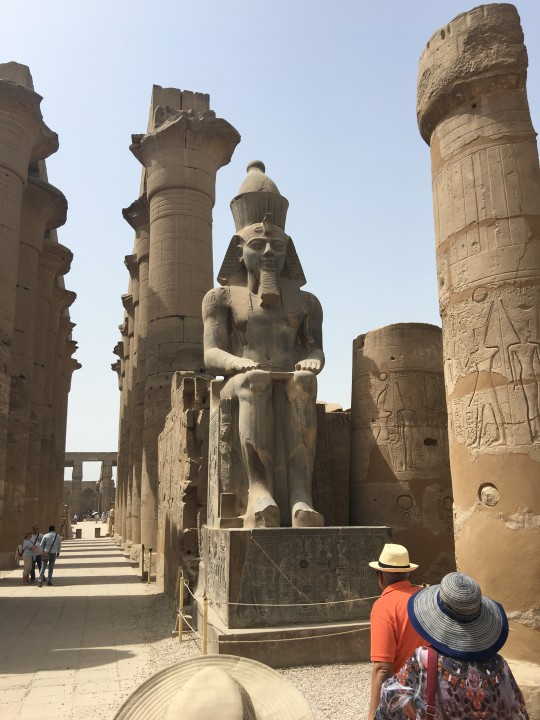
David Graeber and Marshall Shalins in their book “On Kings” argue that we don’t want our kings and rulers to obey the law but to stand above it. A king that is constitutionally limited lacks that superhuman, even supernatural appeal that a ruler that answers to nothing and no-one seems to have. If I see what tyrants historically got away with, and often still do, it could be because of their followers’ need for someone who is truly above all human laws. That could be an echo of what the powerless child saw in its parents before they fell from grace.

The paradoxical combination those two instincts – the drive to protect and cherish our children, triggered by adults that behave like over-sized toddlers and the need for superhuman parent figures, triggered by ruthless individuals openly flaunting laws and conventions – can explain the fanatical devotion and protectiveness paired with unquestioning obedience you so often see destructive tyrants and misbehaving kings surrounded with.

If my suspicions are true, humanity is constantly at risk of being tricked by some of our deepest instincts into admiring, enabling and obeying deeply flawed, psychopathic and destructive individuals. Not because we consciously choose to do so, but because our instincts drive us to it.

So, what can we do about it? Are we doomed to fall for infantile bosses and ridiculous rulers forever?

I certainly hope not. I believe we are more than our instincts. I believe we can train our self-awareness and self-control to recognise and self-correct when our instincts trick us and are being used against us. I also believe we can shape our culture – the shared assumptions, behaviours and stories that our society lays on top of our instincts – to protect us from such abuse and trickery. It does mean we cannot let our culture be dictated by those who want to take advantage of such manipulation. We must, collective, choose to steel ourselves against the abuse of our vulnerable instincts, so we are less inclined to run blindly after rulers that lead us astray.