The Joy of Work

A Healthy Mix

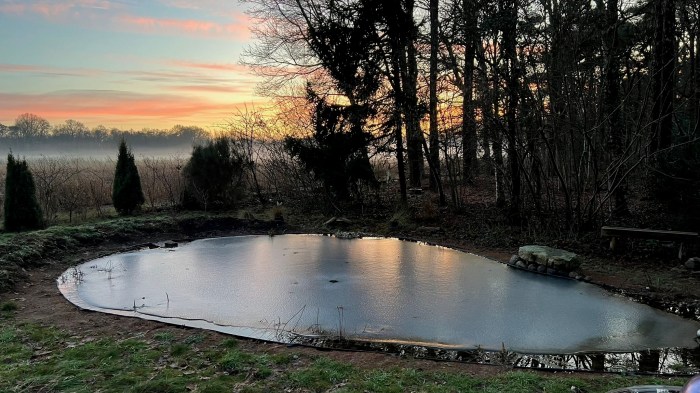
The pond, frozen
@2025 Bard – Pondering the pond

Previously, I said the way to become more productive is to focus more on the quality and value of what you do than on the quantity. It’s not how much you do, it’s how much what you do matters.

That sounds great (at least it does to me), but how do you choose? Out of everything on your to-do list, what has the most value? What makes the most difference?

I have a recipe for that I can fall back on when I find myself at junction of a myriad of possible workflows to step into. The recipe calls for a healthy mix of different types of work, like a balanced meal. It mixes four ingredients, in equal measures. Let me explain.

The Recipe

The ingredients are 4 different types of task/activity. I call them: goalpost movers, enjoying life, necessary maintenance, and recharging time.

Goalpost Movers

Life is not a static situation, but a journey into the future. You determine that journey by the choices you make, over and over again. If you are clear about your goals and ambitions, as I try to be, you want to see progress in the right direction. You want so yourself moving closer to your destination.

For this reason, when plan my work-week, I look first for things that I can do this week that are most in line with the future I envision for myself. I keep this work at the top of my list, and pick 3 of them as targets for the week. I call these the goalpost moving tasks. Per day I reserve time for these tasks, but not so much they take up all of the day. The goal is to have them done by the end of the week. Not to rush through them at the expense of everything else.

Enjoying Life

But life is not just about achieving goals. Life is also about experiencing life itself. The journey, and especially the full appreciation of it, may be even more important than the destination it leads to.

Every day I make sure to at least 3 experience-related task or activity. These are very personal choices, so you will have to find your own. For me, they are things like taking a stroll across our forest property, playing a bit of piano, talking to my wife, reading a book, … Anything that feels good and is active but not too demanding. It’s these activities that help me look back at most days, knowing that they have been good days. Spread out over the month, I also include a few “mini vacations”: concerts, shows, day-trips and other non-work outings my wife and I enjoy immensely.

Necessary Maintenance

Not everything I do is ambitious or enjoyable. Another necessary pick for the week is the kind of work that comes with my responsibilities as a husband, father, home owner, citizen, and human being. Some physical exercise, cooking dinner, making coffee, small repairs, mowing the lawn, doing my tax returns, talking to the neighbours, being active in the community, … The list goes on.

I sprinkle my days with a few small ones, like making coffee and cooking dinner. The bigger ones I try to spread out across the week, or month, depending on how much time and effort they take. I try, as much as possible, to approach them as enjoying life tasks, so they don’t feel too much like work. When that doesn’t work (I just can’t get myself to enjoy tax returns, for instance), I overcome my resistance by accepting them as necessary maintenance – not always pleasant, not always light, but simply part of maintaining a reasonable standard of living.

Recharging Time

And then there is a fourth category that is often overlooked, because it doesn’t feel like work at all. That is the time I need to recover and recharge. My energy and focus are limited resources that drain quickly the harder I work. Once depleted, they need to be refilled, which can only be achieved by doing absolutely nothing, or at least as little as humanly possible.

I do an afternoon meditation, sit by the pond thinking of nothing, or take a power nap. Once a day, at minimum, I force myself to switch off completely, no matter how stressed for time I may be. If I don’t, my productivity goes into a sharp decline, to the point that I would have been better off taking the time doing nothing rather than spending hours slogging on.

Mixing it up

There you have it. Four ingredients to choose from and mix them into an active but balances daily rhythm. It is this balanced mix of different kinds of activities, including doing nothing, that give me the satisfying feeling that I am not just achieving my goals, but am also enjoying the journey, while maintaining a lifestyle I want, without completely wearing myself out in the process.

You know what the most surprising part of all this is? I have found myself, over time, doing less, while achieving more. The stricter I am with sticking to this mix of things to work on and the more I stop myself from pushing myself beyond my own limits, the more I get done that really matters. Making a difference, while enjoying the journey. Moving forward without wearing out.

It’s highly recommended.

@2026 Bard
What could possibly be wrong with loyalty?

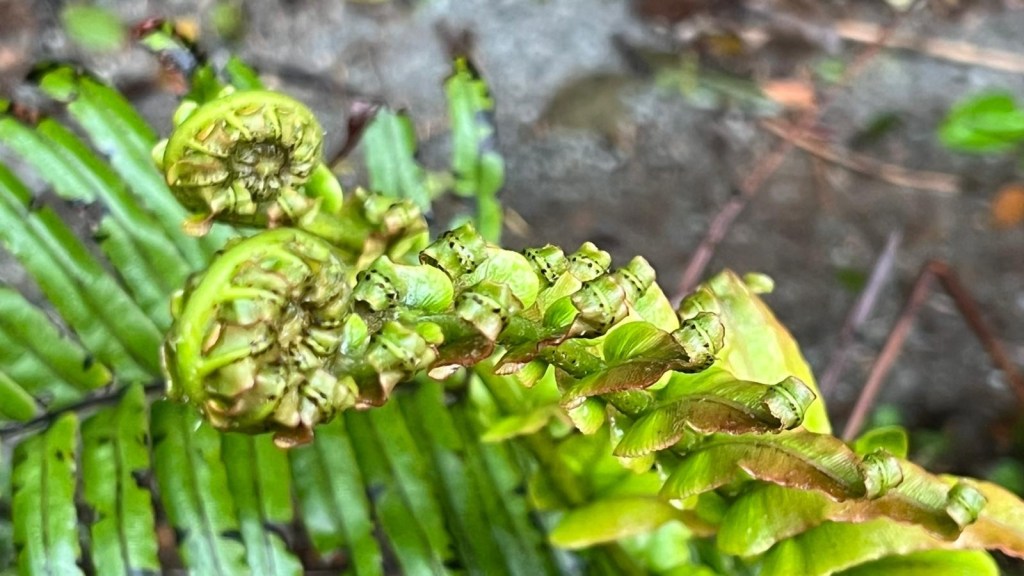
Is it a fern, is it a tree? Why would it be anything to me? ©2025 Bard

What could possibly be wrong with loyalty?

Loyalty is often touted as a positive emotion, something to be admired and rewarded for. Yet loyalty has been the cause of suffering throughout known history and probably long before as well.

Loyalty pressures the individual into sacrifice and suffering ‘for the greater good’. Loyalty motivates groups into discrimination, exclusionism and violence towards ‘others’. It can even lead entire nations into waging wars and committing acts of mass murder and genocide, driven by the conviction that this is the loyal thing to do.

I have always wondered why loyalty was so often expected of me in contexts I didn’t sign up for. I didn’t choose to be born where I was born. I didn’t choose to belong to the religion of my parents, grandparents, and beyond. I didn’t vote for the crazy leaders ruining the countries I have lived in. Yes, more often than not, I was told I owed some sacred duty of loyalty to my family, tribe, religion, country and leaders, to the point of being expected to commit acts of violence against others and even happily give up my life in service of those nebulous but apparently deeply sacred construct I supposedly belonged to.

It seems to me that loyalty to any particular group is always a dangerous proposition, as it automatically and unavoidably means excluding other human beings from my duty of care. Loyalty to ‘us’ always means turning away from ‘them’; the others that are a threat to us, want the good things we have, and would rob, enslave or kill us is we gave them even half a chance. Any care, empathy or concern I might feel for those others, I am constantly told, means disloyalty to those I should think of as mine. As if my capacity for loving kindness is too limited to be wasted on outsiders.

I have always deeply mistrusted loyalty as a motivator, especially as a motivator for exclusion, distrust, violence and hate. Of course, I feel a special fondness and connectedness towards those who are close to me. Of course, I feel gratitude and even a sense of indebtedness to my ancestors who worked so hard and often suffered in order for me to live the beautiful life I am living. I have no problem with being asked to do something in return; to make positive contributions to my family, tribe and nation. But my loving-kindness, my capacity for helping others, my compassion for any life that is suffering is not limited to my in-group only. I see no reason to exclude any living being from my duty of care or compassion. All life is one, as far as I can see, and therefore has an equal claim to my loyalty and love.

No living being of any kind deserves to be excluded, neglected, humiliated, enslaved or killed just for being not us.

What’s the Difference?

Rainbows over Australia – ©2023 Bard

Waiting in an airport lounge I couldn’t escape seeing the news that was broadcasted on TV’s on every wall. And I can’t say that what I saw made me very happy.

The world is full of conflict. North fights South, East fights West, Left fights Right, Children fight Parents, Parents fight each other. Neighbours become bitter enemies; former friends fierce foes. Every slight becomes an issue, every issue a reason for battle.

What pains me to see is that most of those hard-fought conflicts are about imaginary differences and perceived divides. We have a million ways to see another human being as an other instead of an us. Their beards are funny, their eyes too dark, their hair too light, they speak the wrong language, sing the wrong songs, believe the wrong stories. Once categorised, they become less than human. They are different, therefore they are wrong. And because they are wrong they must be fought and punished for their wrongness.

Why is it so hard to see us for who we really are? If you set aside the minuscule variations we rank and divide people by, we are much more similar than we are different. We are all very close relatives with DNA that is practically identical all across the globe.

It may be true that we speak an amazing number of different languages but linguistically speaking the similarities between all human languages are much greater than what sets them apart. Any human child can learn any human language in existence, if exposed to it early enough.

The religions we fight so many bloody battles over all have common themes and images, symbols and stories, similar concept of good and evil, right and wrong. I believe that an alien visitor observing humanity would scarcely be able to keep them apart.

Please, people, for the love of humanity, try to keep in mind we are all the same in spite of those superficial differences we get so hung up about. We are all human, all beautiful and flawed, all magnificent and insignificant at the same time. There are no good guys or bad guys, just people doing things we judge as better or worse. Remember that plenty of good things were done for questionable reasons, and terrible things for the most glorious ideals.

Remember, always, that our shared humanity is what matters more than our perceived otherness. When we have to fight, let’s fight together rather than each other. Let’s unite to fight for justice, equality, peace and happiness. And when we fight such battles make them about the systems, ideologies and dogmas that ruin those ideals, not against the people driven by ideas that threaten what we hold dear. Those people are us, seen from the other side. Let’s not hate them for the flaws we ourselves are just as prone to.

The Kindness of Strangers

A few weeks ago, on the way back from our shopping round, our car started playing up. The automatic brake system started engaging the brakes at random moments, which was scary enough, before all kinds of warning lights appeared on the dashboard, followed by a warning in bold letters on a bright red background that told me the car would start an emergency shut down in 15, 14, 13, …. seconds, inexorably counting down while I was frantically looking for a safe place to take the car off the road.

We almost made it to safety. The car was half on the shoulder of the road, with only a bit of the rear still sticking out when we reached 0 and the car completely died on me, in the process locking the brakes and the steering wheel. It could have been worse, at least most of the car was off the road, but the bit sticking out, on a 1.5 lane road, in a bend flanked by trees, was dangerous enough to have us worried. Whatever I tried, I couldn’t restart the engine, nor could I unlock the brakes and steering mechanism.

Within minutes, a van stopped behind us, the driver got out and asked if he could help. We tried pushing the car further into the shoulder, but it wouldn’t budge, so he apologised profusely, before driving on. The next person to offer help was a local farmer who had been told someone had parked a car on the edge of his potato field. He was very friendly, too, and suggested some numbers we could call to get expert help.

So we called roadside assist (ANWB, for those that know the Dutch system) and waited, hoping no-one would hit us from behind, or cause a head-on collision by steering around our car without checking if anyone was coming from the other direction. Truth be told, there were some near-misses, but no actual crashes.

About an hour later the ANWB guys showed up. He introduced himself and then spent the best part of an hour running all kinds of diagnostics trying to resuscitate our defunct vehicle. To no avail. We had to call a tow truck and were told it would take at least another hour before one would arrive.

To our surprise, the ANWB guy decided to wait by our side. He had turned on the rotating alarm lights on his van and put a series of witch’s hats around our car to make sure no cars would crash into us. And, as relaxed as could be, we then had a very engaging conversation about his work, my work, the state of the world, even politics and a bit of religion, all in a most amicable atmosphere, almost if we were old friends having a yarn over a beer. When the tow truck finally arrived, with the help of the ANWB guy, our completely dead car was successfully loaded onto the tow truck.

He didn’t have to do this. He could have packed up and moved on hours ago. It was pure kindness and helpfulness that made him stay by our side and I will always be grateful for that.

Below you see me carting away our shoppings in a wheelbarrow we had just bought, not knowing it would come in so handy :-).